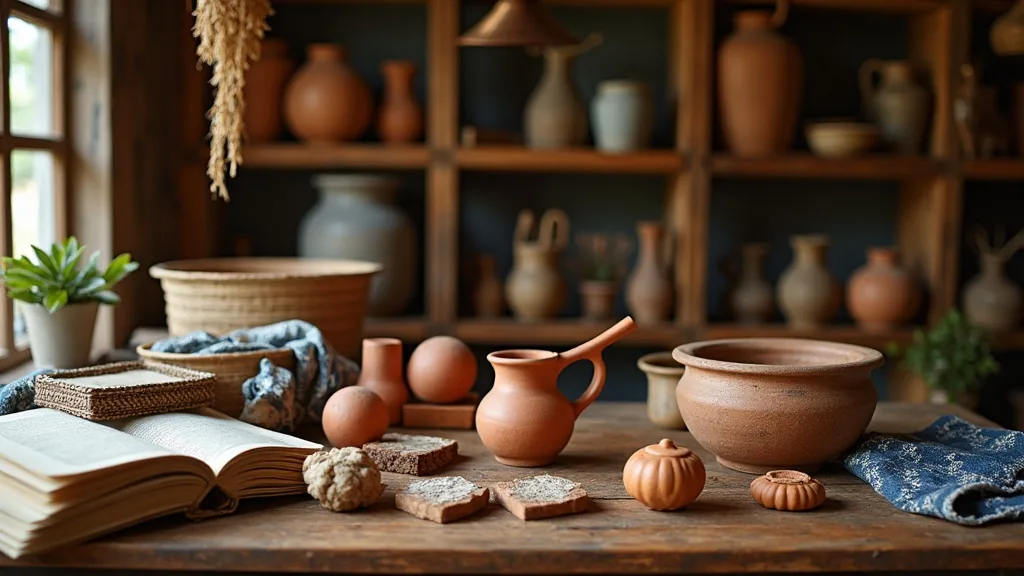
Bali handicraft and home decor sourcing works best through a local agent who vets craft-village workshops, verifies each supplier’s NIB in the OSS portal, inspects goods before packing, and consolidates mixed orders for export — usually FOB Surabaya. We shortlist wood carving, macrame, basketry and ceramics workshops against your specs, then manage QC on a transparent per-project fee.
The longer version: Bali’s decor supply chain is a web of family workshops and village cooperatives, not factories with export departments. Wholesale consistency takes verification, sampling discipline and someone physically in the workshop. We are an independent agent — we broker and inspect; vetting reduces risk, it does not eliminate it.
What can you actually source from Bali’s craft villages?
Six product families dominate, each anchored in a specific part of the island. Wood carving concentrates around Mas and the Tegallalang corridor north of Ubud. Ata-grass basketry comes largely from east Bali, including villages around Tenganan. Pejaten in Tabanan has made ceramics for generations. Macrame and woven wall decor comes from home-based cooperatives island-wide, coordinated by a lead artisan who distributes patterns and collects finished pieces.
Minimums are set workshop by workshop, not by category. A master carver with two apprentices has a different floor than a 40-member basket cooperative. Treat these ranges as conversation starters, not quotes.
| Decor category | Typical MOQ range | What drives the number |
|---|---|---|
| Wood carving (wall panels, statues, bowls) | 20–50 pieces per design | Carver capacity; timber drying time |
| Macrame and woven wall hangings | 30–100 pieces per design | Number of home workers in the cooperative |
| Baskets (ata grass, rattan, seagrass) | 50–200 pieces | Weaving speed; raw-material harvest cycles |
| Ceramics and tableware | 50–300 pieces | Kiln batch size; glaze consistency runs |
| Boho mirrors, lampshades, wall decor | 30–100 pieces | Frame supply and finishing capacity |
| Carved furniture accents (headboards, consoles) | 10–30 pieces | Timber stock and floor space |
Small workshops sometimes accept trial orders below these floors on existing patterns; we negotiate that case by case, in writing.
How do we vet a workshop before you pay a deposit?
Verification first, relationships second. Every shortlisted workshop goes through the same checks.
- NIB validation in OSS. The OSS portal is the only official government platform for checking Indonesia’s 13-digit National Business Identification Number — active status, registered address, KBLI classification, shareholders. A supplier who refuses to share an NIB should be assumed to operate outside the formal economy — common in craft villages, and a real constraint on export paperwork.
- Tax and export history. Tax standing via the DJP portal at ereg.pajak.go.id; export track record via the DJBC e-Service, which surfaces PEB export declarations and clearance history. Many excellent artisans have neither — we then route the shipment through a registered exporter and tell you who that is.
- Minimum three candidates. Standard Indonesian procurement practice compares at least three vendors; we score on sample quality, capacity, lead time and formality.
- An unannounced visit. Roughly two hours on site checking raw-material stock, work in progress, worker conditions — and whether the “workshop” is actually a trading office reselling someone else’s carving.
One more reason buyers work through an agent: between January and June 2026, OSS blocked new low-risk-KBLI PT PMA registrations in Bali, and an IDR 10 billion paid-up capital rule for PT PMA has been proposed — pushing importers toward contract-based agency models. As of 2026, subject to change.
How do you get wholesale consistency from handmade goods?
Handmade variation is the product’s charm and the importer’s headache. The fix is defining, in writing, which variations are acceptable.
- A signed master sample — one approved reference held by us, one by the workshop, photographed and dimensioned.
- A tolerance sheet — acceptable ranges for size (commonly plus or minus 5–10 percent on hand-carved items), color, weave density and finish, agreed before the deposit.
- A calendar that respects Bali. Nyepi shuts the whole island for a day; Galungan and Kuningan pull artisans into ceremony duties; the rainy season slows wood drying, and timber shipped too wet cracks in dry climates.
- Two QC touchpoints — an in-production check at roughly one-third completion, and a pre-shipment inspection against the tolerance sheet. Inspection reduces defect risk; it is not a guarantee, and we never promise customs clearance.
Which items cannot leave Indonesia?
Some objects that look like decor are legally or culturally restricted. Genuine antiques and items designated cagar budaya (cultural heritage) need permits and often cannot be exported at all. Consecrated temple objects (pratima), ritually activated barong or rangda masks, and heirloom keris are the categories we flag most. Newly made replicas are generally exportable with documentation stating they are new production; we obtain that paperwork from the workshop.
Wood adds its own layer: timber-legality documents under Indonesia’s SVLK scheme and ISPM-15 packing are routinely required for carved-wood shipments. Requirements have shifted since Indonesia’s regulatory changes took effect 1 January 2026, so we confirm the documentation list per shipment. As of 2026, subject to change.
What does it cost and how long does it take?
No reliable published price benchmarks exist for Bali handicraft — costs swing with timber species, fiber harvests and order size — so we publish fee logic instead of a rate card. Every engagement is quoted per project before you commit.
| Engagement option | What you get | Typical duration | How it is priced |
|---|---|---|---|
| Workshop shortlist | 3–5 vetted candidates per category: NIB check, photos, capacity notes, indicative MOQs | 5–10 working days | Flat scoping fee, quoted after your brief |
| Full sourcing and QC | Shortlist, sampling, negotiation, in-production check, pre-shipment inspection | 6–12 weeks, order-dependent | Disclosed commission on order value — you see workshop invoices |
| QC-only inspection | Workshop visit, inspection against your tolerance sheet, photo report | Report within 72 hours of visit | Per-visit fee, quoted per location |
| Consolidation and export handoff | Multi-workshop cargo combined, packed, documented via licensed forwarder | 1–2 weeks after final QC | Itemized pass-through costs plus handling fee |
Most Bali suppliers quote FOB Surabaya (Tanjung Perak, Java) rather than Benoa — trucking Bali-to-Java is usually the cheaper export route, and we build that leg into the timeline.
How does booking work?
- Send your brief — product references, target quantities, destination — via the form below or WhatsApp.
- Scoping call. We confirm feasibility, flag restricted items, and quote our fee in writing.
- Shortlist delivered, typically inside two weeks, with verification notes.
- Sampling and negotiation. You approve a master sample and tolerance sheet; you pay workshops directly, and our fee is invoiced separately — no buried margin.
- Production with QC checkpoints and photo reports.
- Consolidation and export handoff through licensed logistics partners, usually FOB Surabaya.
Request a handicraft sourcing shortlist
Tell us what you want to import; we reply with vetted workshop candidates and a written fee quote — no obligation. Bali Product Sourcing is part of Juara Holding Group — an Indonesian group operating from Bali across Indonesia since 2015.
- WhatsApp: +62 811-3941-4563
- Email: bd@juaraholding.com
- Or use the shortlist request form on the contact page — category, quantities and destination are enough to start.
Frequently Asked Questions
What is the minimum order quantity for Bali handicraft workshops?
There is no standard MOQ — each workshop sets its own floor based on capacity. Wood carving commonly starts around 20–50 pieces per design, baskets around 50–200, ceramics around 50–300. Small workshops sometimes accept trial orders on existing patterns. We confirm real minimums per workshop during shortlisting rather than quoting category averages.
Can Balinese artisans keep quality consistent across a wholesale order?
Yes, if consistency is defined in writing before production starts. We use a signed master sample plus a tolerance sheet covering size, color and finish ranges, then inspect during production and again before shipment. Handmade items always vary slightly; the tolerance sheet turns that variation into an agreed spec instead of a dispute.
Are there export restrictions on sacred or antique Balinese items?
Yes. Genuine antiques and objects designated as cultural heritage require permits and often cannot leave Indonesia, and consecrated items such as pratima or ritually activated masks should not be exported. Newly made replicas are generally fine with documentation confirming new production. We flag restricted items at the scoping stage, before you commit.
Do Bali handicraft orders ship from Bali or from Java?
Usually Java. Most Bali suppliers quote FOB Surabaya (Tanjung Perak) because trucking cargo from Bali to Java is normally cheaper than exporting through Bali’s Port of Benoa. The overland leg adds a few days, which we build into your production timeline and consolidation plan from the start.